Kroger’s pricing process relied heavily on manual, spreadsheet-based workflows despite operating at massive scale. Division pricing analysts gathered competitive pricing data from stores each week, often reviewing hundreds of prices manually before using macro-based Excel analysis, manual adjustments, and overnight batch processing in legacy systems. This fragmented process created inefficiencies, limited scalability, and placed a significant workload on analysts.
As a Product Design Manager at Kroger, I led a team of designers across five products with the goal of modernizing the pricing workflow. The objective was to reduce manual review, automate rule-based pricing changes, connect disconnected systems, and enable more real-time, adaptive pricing strategies. A key challenge was building stakeholder trust in a low design-maturity environment where long-standing processes were familiar but difficult to scale.
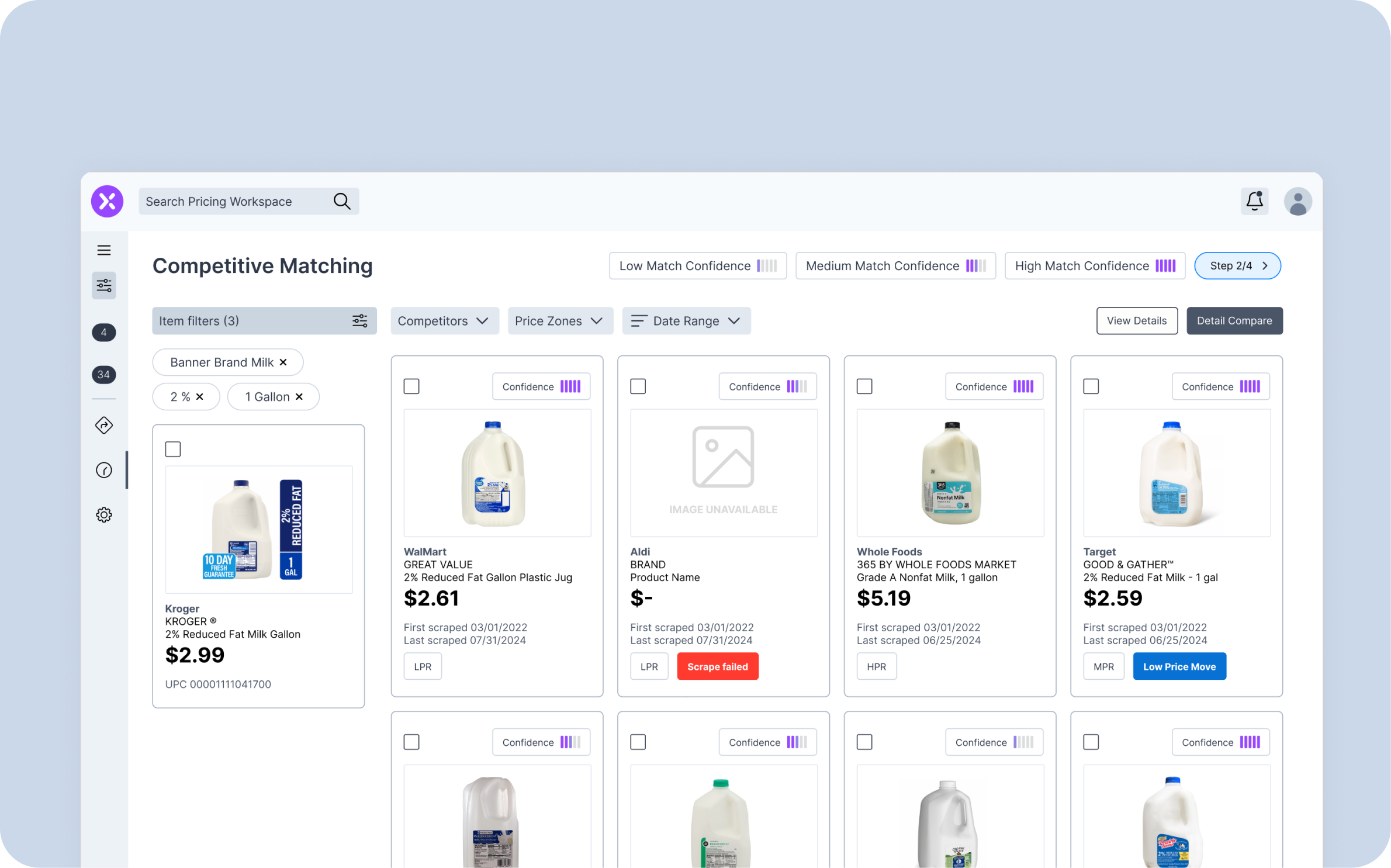
I led the redesign strategy by ideating on AI-driven competitive data management, automated workflows, and a future-state pricing experience centered on competitive intelligence. Solutions included a recommendation engine for product matches, AI-assisted item matching, an insights dashboard for competitive analysis, and a representative price selector for zones and channels. To drive adoption, the design team conducted workshops, shadowing sessions, and usability testing over the course of a year, working alongside stakeholders to co-create user-centered, automated processes.
The redesigned pricing process vision transformed a manual system into an intelligent, scalable workflow. Analyst workload would be reduced from approximately 60 hours per week to just 2 hours, freeing teams to focus on strategic decision-making rather than repetitive data review. The initiative also improved pricing accuracy, operational efficiency, stakeholder engagement, and positioned Kroger for a future “human-in-the-loop” pricing model where analysts intervene only when anomalies are flagged.
Full case study available on request.