Led the transformation of Kroger’s legacy Weekly Ad from a static, manual system into a dynamic, personalized digital experience.

Oversaw teams developing backend infrastructure, APIs, and merchandising tools that power Kroger.com and the mobile app, while defining the personalization strategy in partnership with senior leadership and BCG.

Kroger Weekly Ad: Modernizing a Legacy Experience

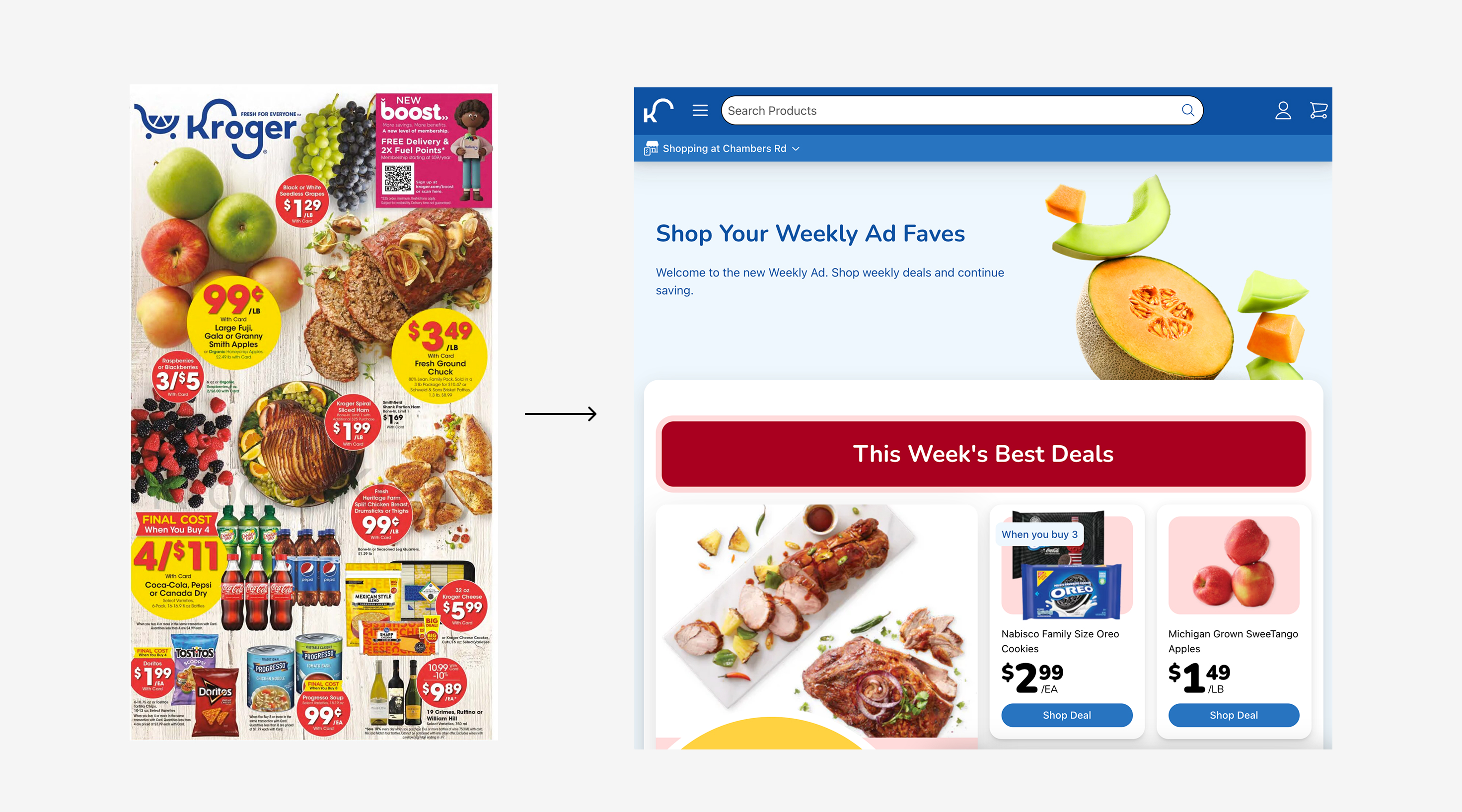
Since joining Kroger’s merchandising technology organization in August 2022, I’ve led several teams focused on modernizing the tools and infrastructure that power merchandising. One of my primary responsibilities has been overseeing the transformation of Kroger’s long-standing Weekly Ad — a decades-old marketing staple that was traditionally printed, mailed to households, or stacked in-store for shoppers to pick up.


For many, especially younger audiences, this print ad may seem like a relic — but for millions of Kroger’s loyal customers (think your grandparents), it remained a trusted way to discover deals and plan shopping trips.
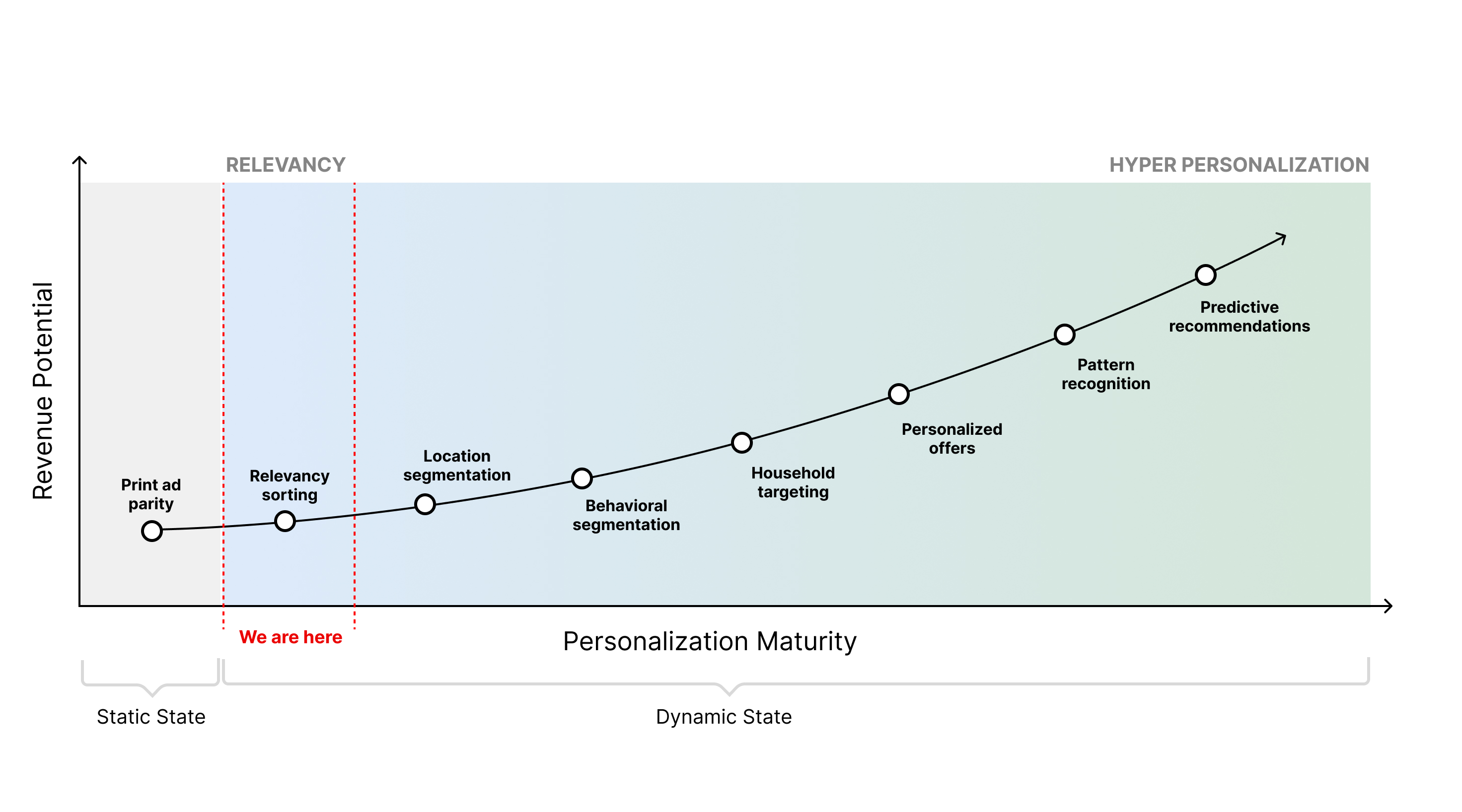
The Legacy Process

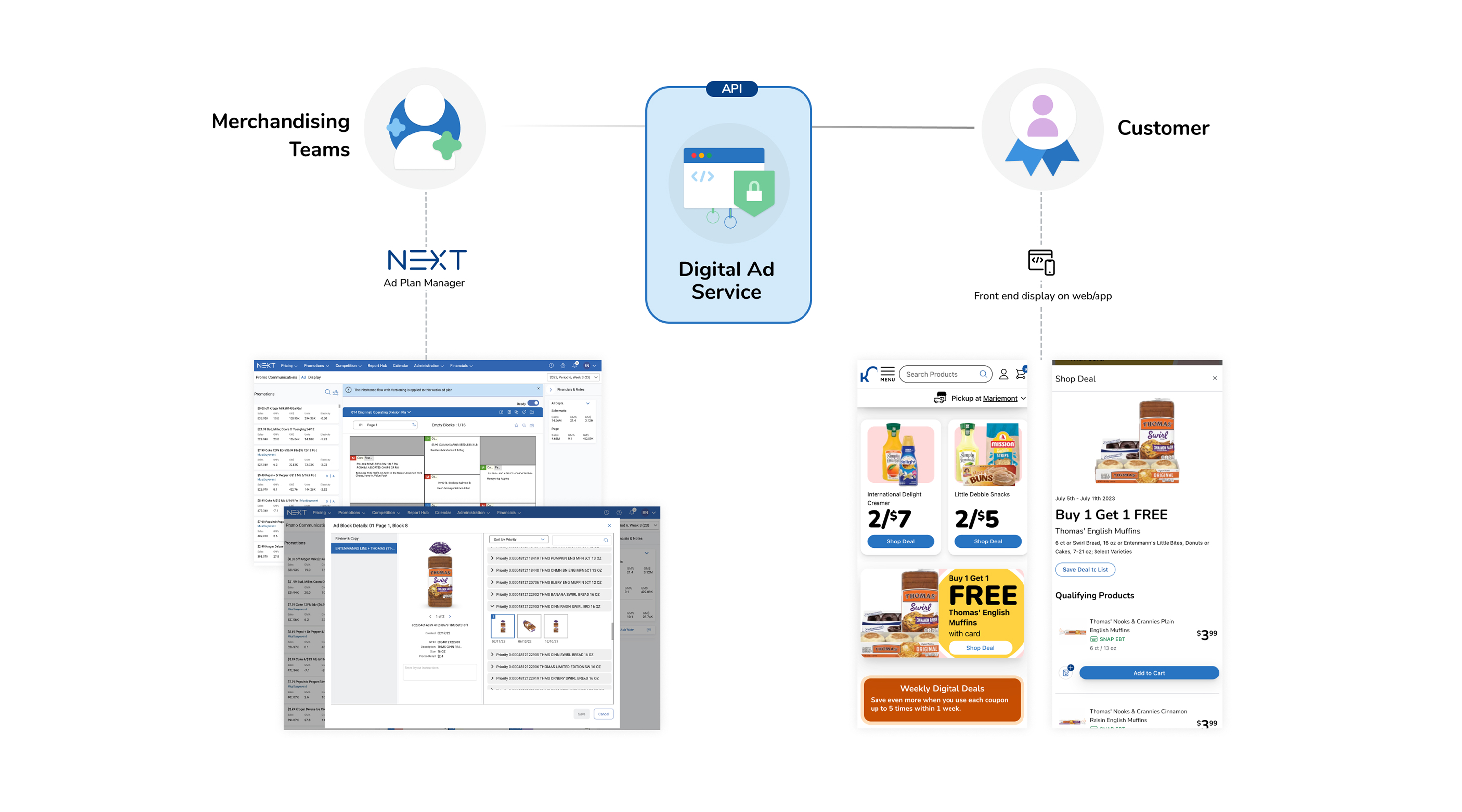
When I stepped into the role, our team managed a legacy tool called Ad Plan Manager — essentially a digital planning tool for the print and online versions of the weekly ad. The system was static and manual, offering limited flexibility and no personalization capabilities.


It had evolved only slightly from its spreadsheet origins — what I like to call building “faster horses.” While we managed to digitize the ad planning process and generate an API to surface ad data for Kroger.com and the mobile app, the underlying process remained rigid and manual. The API was the first big milestone, but it was still powering a one-size-fits-all experience.

The Personalization Challenge

As Kroger shifted toward a company-wide strategy centered on personalization, our team faced a new challenge: How could we transform a static, legacy-driven ad into a dynamic, personalized experience for every customer?


With leadership and Boston Consulting Group (BCG) driving this vision, we embarked on a series of discovery workshops, stakeholder interviews, and process mapping sessions. The outcome was a comprehensive strategy and experience roadmap — charting the path from basic relevancy to hyper-personalization.


Our ultimate goal was to evolve the Weekly Ad into something uniquely tailored — where each shopper could see customized promotions based on their preferences, behaviors, and buying patterns.

Evolving from Fixed to Dynamic

Transformation required us to unravel decades of legacy complexity. The old ad was built around confusing promotional constructs that made sense internally, but not to the customer.


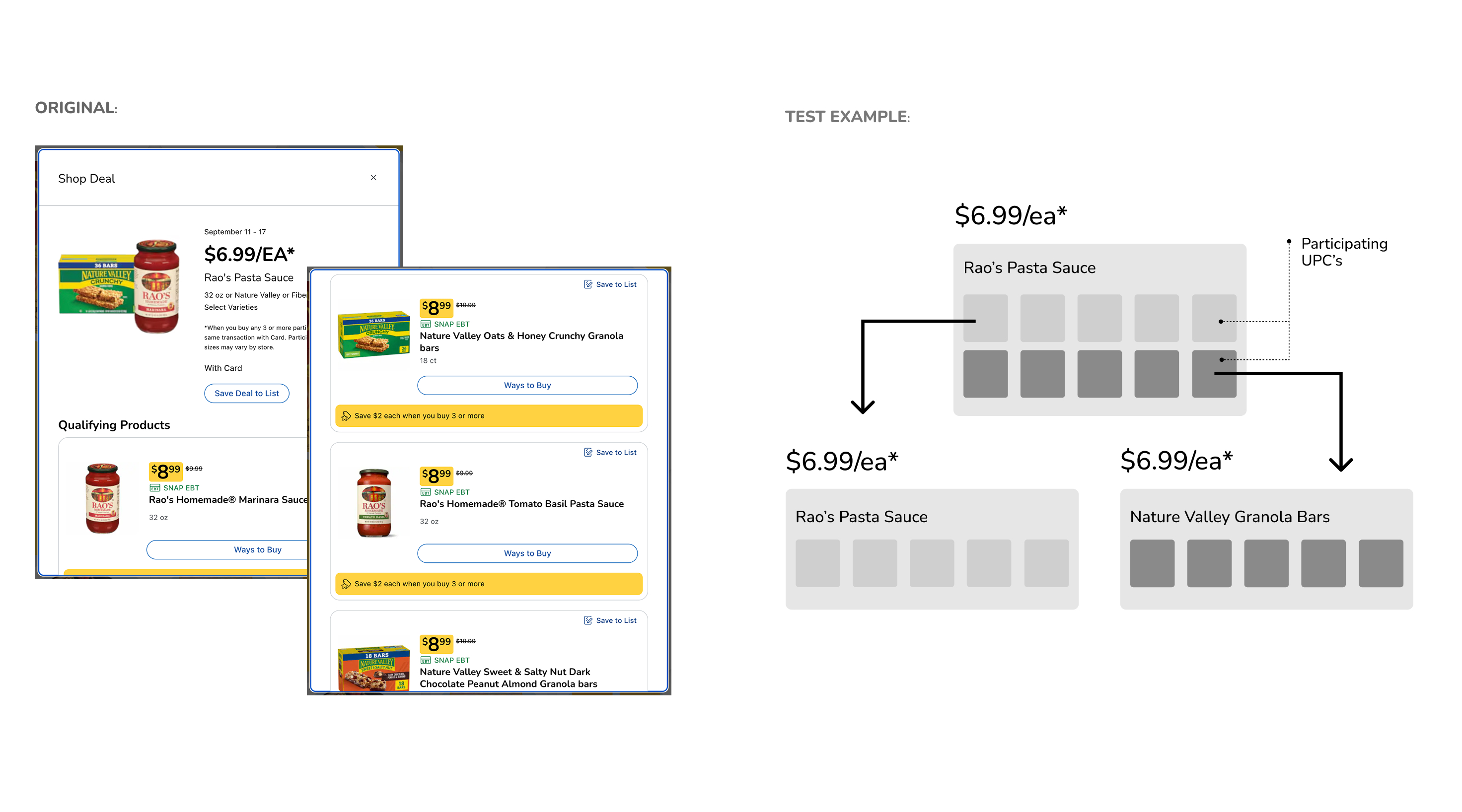
One striking example was what we jokingly called the “Beans and Lemonade Problem” — promotions grouping completely unrelated items (like pasta sauce and granola bars) under a single “buy two or more for $6.99” deal. This approach forced customers to navigate retailer logic instead of their own shopping logic.


To address this, we began running A/B tests — one pilot currently active in Columbus, Ohio — to separate these items into their own ad blocks and rank them by likelihood to purchase, using signals like flavor preferences and product imagery. This was our first step in moving from “crawl” to “walk” — building the foundation for a future dynamic system.

The Future State Vision

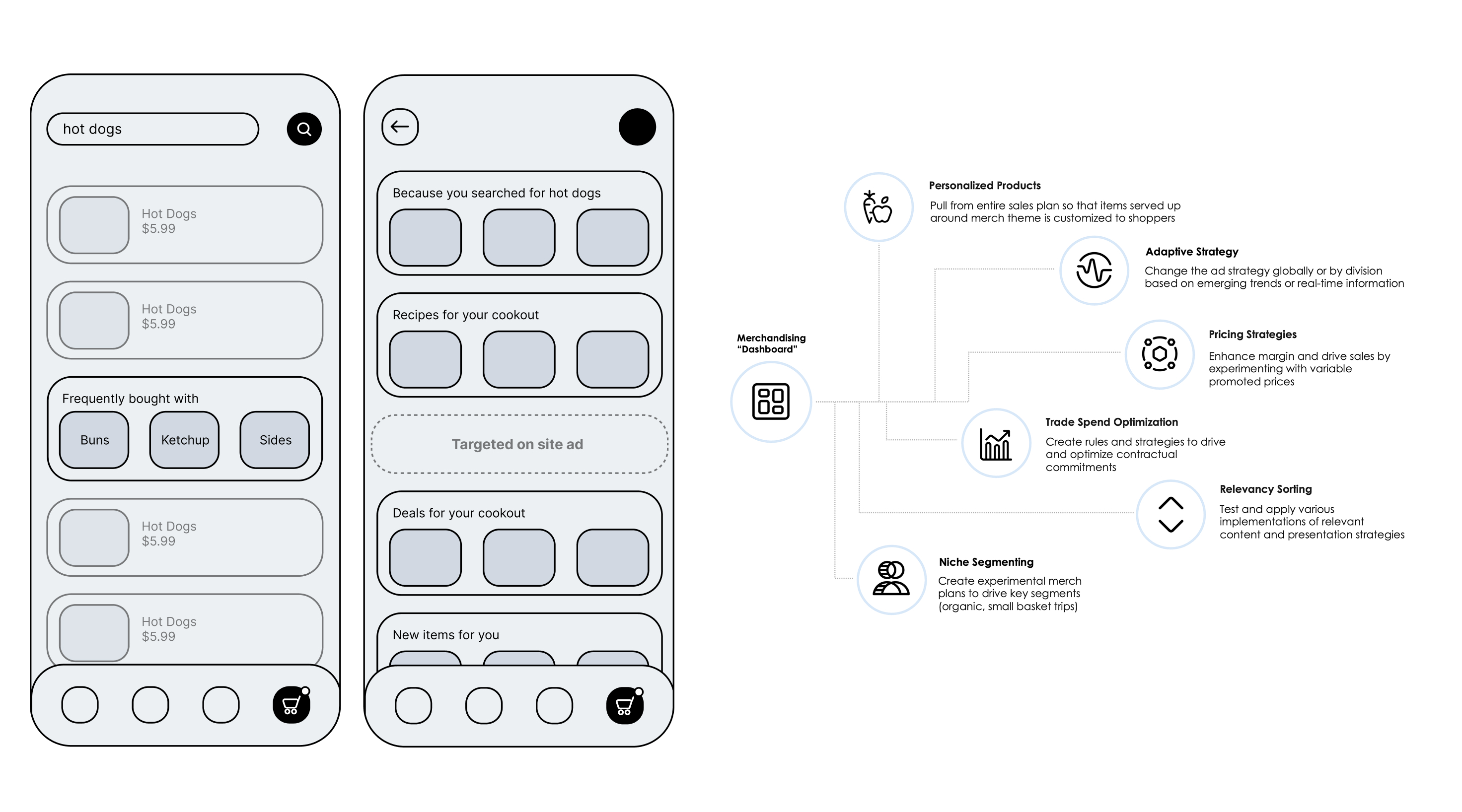
Looking ahead, our vision is to create a sophisticated merchandising platform — something akin to Meta Ads Manager or Google Ads Manager — designed specifically for retail.


This future-state toolset will empower merchandisers with a dashboard-driven experience, offering real-time insights, customizable promotional levers, and the ability to test targeted offers at scale. Instead of manually selecting products for promotion, we’ll shift toward an outcome-based approach, where data science drives offer optimization and AI generates personalized customer experiences. Collaboration with our CX teams has been key in shaping this vision — ensuring that every technological advancement aligns with delivering real, human-centered value to Kroger’s customers.